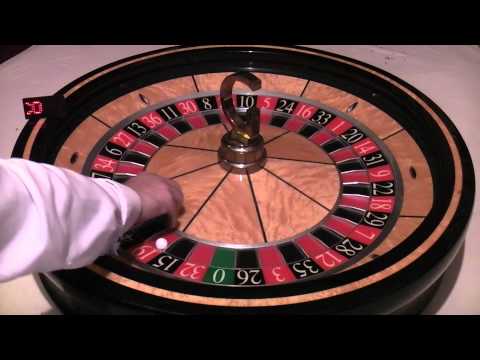
Classic casino games have been around for centuries. From the lavish roulette wheels of Monte Carlo to the blackjack tables lining modern pit floors, the rules are analyzed, the strategies discussed, and the appeal covers generations. Take these games online, though, and the experience transforms, some parts get enhanced, others get more challenging. Access a site like Cash Lounge Casino and you’ll see familiar titles adapted with digital interfaces, bonus triggers, and instant play. Recognizing the real advantages and the subtle drawbacks of these games, whether you play RNG virtual versions or live dealer streams, enables you make more informed choices. This piece explores the practical trade-offs, sorting the lasting strengths from the friction that technology and regulation bring.
The Enduring Appeal of Classic Table Games
Traditional table games endure because they mix basic rules with real strategic depth. Take blackjack: you have a distinct goal, defeat the dealer without going over 21, but best play relies on a mathematically proven basic strategy that can push the house edge down to around 0.5% under solid rules. Roulette is pure chance, yet the dramatic drama and the betting spread, from even-money outside wagers to single-number bets paying 35 to 1, maintain players engaged. Baccarat, once restricted to high-roller salons, has surged in popularity thanks to its minimal decision load and a house edge of only 1.06% on the banker bet. These games do not rely on glitzy effects or complex storylines. Their core are obvious, and that transparency builds trust. You recognize exactly what you’re dealing with, a mental comfort that novelty novelty games rarely deliver.
Beyond the numbers, classic games carry social and cultural weight that video slots fail to equal. The traditions of a blackjack table, knocking on the felt for another card, the unified groan when the dealer pulls a five-card 21, build a collective experience. Even online, live dealer studios mirror that atmosphere with expert croupiers, multi-angle cameras, and chat. That social aspect eases the isolation of digital play. Because these games have been around for decades, new players can tap into a wealth of strategy guides, odds calculators, and forums to climb the learning curve fast. The familiarity also lets casinos like Cash Lounge Casino roll out multiple variations, European Roulette, American Blackjack, Speed Baccarat, without losing the core crowd. That provides you the freedom to select a ruleset that suits your appetite for risk.
Grasping the House Edge and Payment Structures
Every classic game is characterized by its house edge, the mathematical advantage the casino holds over the player in the long run. Grasping those percentages is the single most important move before you bet real money. Blackjack, with perfect basic strategy and friendly rules (dealer stands on soft17, doubling after split allowed,3:2 payout on a natural), can drop the house edge to as low as0.5%. European Roulette, with its single zero, sits at2.7%; American Roulette’s double zero bumps that to5.26%. Baccarat’s banker bet gives a1.06% edge, player bet1.24%. Classic three-reel slots, often lumped under the ‘classic’ label, swing wildly from2% to8% depending on the paytable and the casino’s return-to-player (RTP) configuration. These numbers let you pair your bankroll to the game that gives you the longest runway.
Payment structures set the classics apart, too. A straight-up roulette win pays35:1, but the true odds of hitting a single number on a European wheel are36:1, that gap is the house edge. In blackjack, a natural21 paying6:5 instead of the old3:2 jumps the house edge by roughly1.4%, a rule tweak you want to dodge at all costs. Baccarat’s tie bet, even with its alluring8:1 or9:1 payout, carries a house edge north of14%, making it a sucker bet. The following list highlights typical house edges for classic games under standard rules, though exact figures depend on the variant offered at Cash Lounge Casino:
- Blackjack (3:2, dealer stands on soft17):0.5%–0.8%
- European Roulette (single zero):2.70%
- Double-zero roulette (double zero):5.26%
- Baccarat (banker bet,5% commission):1.06%
- Baccarat (player bet):1.24%
- Traditional slots (3-reel, single payline):2%–8% depending on RTP
- Electronic poker (Jacks or Better, full-pay):0.46% with optimal strategy
Players should always check the specific paytable and rules of the game they are loading. A seemingly minor rule tweak, such as blackjack paying6:5 or roulette using the American layout, can triple the house edge. Responsible platforms make this information accessible, and the best practice is to consult the game’s help file or the casino’s RTP section before committing funds.
How Digital Platforms Change Classic Game Mechanics
Shifting a classic from the felt to the screen isn’t just a translation, it’s a mechanical overhaul. Random Number Generators (RNGs) replace from physical wheels and shuffled decks. Audited RNGs generate statistically fair results, but the missing physical randomness affects player trust. Some users will never trust digital outcomes, even though the UK Gambling Commission and similar regulators require rigorous testing. Live dealer games handle that by streaming real wheels and cards in real time, mixing digital convenience with physical tangibility. Cash Lounge Casino, like many operators, has both. You pick between the speed of RNG and the authenticity of a live studio. That dual approach admits that the ‘classic’ label now describes two different products, each with its own rhythm and psychological feel.
Digital platforms offer rule tweaks that would be nonsense in a physical casino. Infinite blackjack distributes the same opening hand to unlimited players, removing seat limits. Auto-roulette turns a mechanical wheel without a dealer, starting a new spin every40 seconds. These fixes address the pace and capacity headaches, but they erode some communal rituals. You can’t gauge a dealer’s body language or enjoy a win with a neighbour at an infinite blackjack table. The online interface also slaps on data, hot and cold numbers, recent results, trend graphs, that no land-based pit boss would ever display. That info might guide a bet, but it can also feed the gambler’s fallacy, prompting you to think a number is ‘due’ when every spin is independent. The platform shapes behaviour just as much as it distributes the cards.
Offers and Promotions Designed to Classic Games

Online casinos rely on bonuses to draw players, but classic games often sit in an odd spot with promotional terms. A typical welcome package at a brand like Cash Lounge Casino might bundle a deposit match and free spins, but those free spins are almost always restricted to specific slot titles, not table games. The deposit match cash can usually be used on classics, yet wagering contributions vary sharply. Slots normally contribute 100% of each bet toward clearing the bonus; blackjack, roulette, and baccarat might account for only 5% to 20%, or get excluded entirely. The reason is simple: the low house edge on table games provides you a better shot at turning bonus funds into withdrawable cash, and operators shield against that. If you plan to use bonus money on blackjack, you’ve got to read the terms like a contract.
To plug that gap, some casinos now craft promotions targeted directly at classic games. Live casino cashback, for example, gives back a slice of net losses on live dealer tables over a fixed stretch, often with low or zero wagering requirements. Leaderboard tournaments for blackjack or roulette award prizes for consecutive wins or top multipliers, adding a competitive edge without twisting the core math. Cash Lounge Casino, like its rivals, might run time-limited events where playing certain classic tables accumulates loyalty points at an accelerated clip. The player’s job is to price the bonus honestly: a 100% match up to £100 with 35x wagering on slots looks fine, but if classic games only count for 10%, the effective playthrough swells to 350x the bonus amount, which is absurd. Always crunch the real wagering load before you click ‘claim’.
The Drawbacks That Traditional Formats Carry
Polish aside, classic casino games have built-in limits that become more apparent online. Pace is a big one. A physical roulette wheel might spin once every two to three minutes, and a full blackjack table can slow to a crawl when players overthink. Online RNG versions give you control of the pace, but live dealer tables still operate at the dealer’s pace and everyone else’s pace, which frustrates anyone looking for quick sessions. Betting ranges can also be restrictive. In land-based venues, high minimums can exclude casual players. While platforms like Cash Lounge Casino often offer low-stakes digital tables, live dealer games tend to match real-world floor limits, starting at £1 or £5 but increasing during peak hours.
The strategic side that attracts players to blackjack or video poker can become a double-edged sword. Skip basic strategy in blackjack and the house edge balloons to 2% or more, far worse than plenty of slots. Baccarat’s simplicity, appealing as it is, leaves almost no room for skill, which can disappoint players who like to feel in control. Classic games also are missing the layered storylines, progressive jackpots, and gamification hooks that modern slots lean on to keep you spinning. A roulette spin is a binary result, without bonus rounds, no narrative. Purists label this purity, but the average online player, accustomed to interactive entertainment, might consider the cycle monotonous. That’s why many casinos now sprinkle classics with jackpot side bets or multiplier features, attempting to close the gap without watering down the core game.

Financial Transactions, Safety, and Integrity in the Virtual Space
The integrity of classic games online hinges fully on the platform’s licensing, protection arrangement, and financial handling. Any licensed casino in the UK market must hold a licence from the UK Gambling Commission, which applies tough rules on game fairness, anti-money laundering, and holding player funds apart. Look up the licence number in the footer of the casino’s homepage and confirm it on the Commission’s public register. Cash Lounge Casino, aimed at UK players, should show these credentials openly. In addition to the licence, SSL encryption locks down your financial and personal data. Independent testers like eCOGRA or iTech Labs confirm that RNG outcomes are statistically random and that posted RTP figures match reality. That level of oversight means a properly licensed digital blackjack deal is, in a way, more auditable than a physical shuffle.
How fast you get your winnings from classic games depends directly on the payment methods. UK-facing casinos generally accept Visa, Mastercard, PayPal, Skrill, Neteller, bank transfers, and progressively Trustly or open banking. E-wallet withdrawals usually arrive within 24 hours after verification, while card and bank payouts can need two to five business days. Your first withdrawal almost always prompts ID checks (proof of identity, address, and ownership of the payment method) a regulatory must that can delay that first cashout. Get that KYC early to prevent frustration. Deposit and withdrawal caps vary, and high-stakes players at classic tables should eyeball the maximum transaction limits. The cashier page at Cash Lounge Casino outlines the exact methods, fees, and processing times. Read it before you fund your account; some payment methods won’t be eligible for bonus claims.
Mobile Compatibility and the Current Player Experience
The move to mobile has reshuffled how classic casino games are enjoyed. A blackjack hand or roulette spin that once needed a desktop and a solid broadband line now runs smooth on a phone over 4G or 5G. Cash Lounge Casino, like most modern sites, operates on responsive HTML5, so the game lobby adjusts to your screen without any app download. That instant browser access removes friction, enabling you jump into a quick session during a commute or break. But the mobile screen limits things. A roulette table with a full racetrack layout feels small on a six-inch screen, and complex blackjack strategy charts are a pain to consult mid-play. Touch controls are intuitive, but mis-taps are real. Accidentally hitting ‘stand’ instead of ‘hit’ is a genuine risk.
Live dealer games on mobile bring their own blend of upsides and downsides. Video stream quality on modern phones is excellent; adaptive bitrate tech modifies resolution to fit your connection. The chat and dealer banter work well on a small screen, keeping the social vibe alive. The trade-offs: battery drain and data use can accumulate during long live sessions, and if you’re on mobile data, you’ve got to watch caps. The sharpest mobile casinos refine their classic game lineup with simple interfaces, one-touch betting, and quick-seat options that skip the lobby. Try a few titles in demo mode, when available, to assess responsiveness. Mobile has rendered classic games accessible anywhere, but the best experience belongs to those with a steady connection and a screen large enough to prevent fat-finger errors.