
I have always believed that grasping a casino game’s payout table is the single most practical step a player can take before wagering a single cent. A payout table is far from a graphic panel tucked behind the reels or a footnote on a felt layout; it is a clear indication of value. It tells me exactly how much each winning combination pays, which symbols trigger special features, and what conditions I must meet to unlock the best possible returns. Over the years, I have discovered that players who ignore payout tables are essentially gambling blind, while those who study them can make sharper decisions, manage their bankrolls more effectively, and even identify games that align with their personal risk tolerance. At Playzilla Casino, I find that the platform’s game library, which spans thousands of slots, classic table games, live dealer experiences, and video poker titles, makes it easier than ever to put that knowledge into practice. The transparency of the gaming environment, combined with clear access to each game’s information panel, means I can quickly pull up a payout table on my desktop or mobile device and start evaluating the numbers. When I talk about practical tips for payout tables, I am not referring to abstract theory. I am talking about the real, actionable steps I take every time I log in: comparing pay structures, identifying the true cost of a bet, and spotting the subtle differences that separate a game that works for my budget from one that will drain it faster than expected. This article is built entirely around those steps, and I will share exactly how I use payout tables to turn a casual session into a more informed, controlled, and ultimately more enjoyable experience.
Closing Reflections: Getting Payout Tables Perform for Your Benefit
I now view payout tables not as static information but rather as a dynamic tool that I can employ to shape every session. The practical tips I have offered, from the method I examine a slot paytable layer by layer to the method I evaluate video poker schedules and align table game bets with the lowest house edge, all fulfill one purpose: to put control back in my hands. I do not need to rely on luck alone when I can choose games that are structurally more favorable. I do not need to guess at volatility when the payout distribution reveals to me what to expect. And I do not need to treat bonuses as mysterious chunks of money when I can match them to games with payout tables that provide me with the best chance of meeting the requirements. The real value of this knowledge is that it accompanies me. I can apply this framework anywhere: on my laptop at home, on my phone during a commute, or when trying a new live dealer title at Playzilla Casino. I possess a repeatable framework for evaluating any game within seconds. I understand what to look for, I know what the numbers mean, and I understand how to adjust my bet size and strategy accordingly. The platform’s extensive library, clear information panels, and flexible payment options establish it an ideal environment for this kind of active, informed play, but the mindset is what matters. I encourage every player to make the payout table the first stop, not an afterthought. When you do that, you are no longer just playing a game; you are playing with a plan, and that plan is built on the most reliable information the casino gives you.
Video Poker Pay Tables: Full Pay Versus Reduced Pay Detailed
Video poker games is the game type where pay schedules are the most transparent predictor of long-term payout. Each version, be it Jacks or Better, Deuces Wild game, or Double Bonus Poker, has a defined set of pay schedules, and the difference between a full pay schedule and a reduced payout table can amount to several percentage points in RTP. I typically start by examining the return for a full house and a flush hand in Jacks or Better video poker. A full pay table, frequently termed 9/6, gives 9 credits for a full house and 6 for a flush hand with a single coin bet. If I see an 8/5 or 7/5 table, I recognize the payout is substantially lower, and I will stay away from it. The same rule applies to other variants. In Deuces Wild game, the key figures are the payout for a straight flush and quads, while in Double Bonus Poker video poker, the four of a kind returns for aces, twos hand, threes hand, and fours hand are the critical indicators. I have discovered that even a one-coin reduction in any of these payouts can alter the RTP by greater than 1%, which over a long session has a noticeable effect on my results. The appeal of video poker games is that the pay table reveals to me almost everything I need to understand about the game’s honesty, and the optimal strategy is built directly around those payouts. At Playzilla Casino, I am able to filter the video poker selection and quickly view the pay table for each title. I always take the time to check the schedule against the full pay benchmarks I have committed to memory. If I am not sure about a certain game, I will check a strategy chart before betting, but the first filter is always the payout schedule itself. A game with a generous pay schedule is worth mastering, and a title with a bad one is never worth my time.
- Jacks or Better game optimal pay (9/6) returns 99.54% with perfect play; 8/5 decreases to 97.30%.
- Deuces Wild video poker optimal pay (25/15/9/5/3/2) returns 100.76% with ideal strategy; avoid lower quads payouts.
- Double Bonus Poker game maximum pay (10/7/5) for aces, deuces, threes, and fours, and other four-of-a-kind offers a high return above 100% in exceptional cases.
- Always verify the single-coin payout for a flush hand and a full house; these represent the most common indicators of a reduced table.
- If a game offers a progressive payout, the payout table will indicate the starting amount and the required hand, typically a royal flush.
What You Can Anticipate As You Browse Games at Playzilla Casino
When I access Playzilla Casino, I enter a space that is structured to encourage exactly the kind of informed play I have outlined. The platform gathers thousands of titles from leading software providers, and every game I have opened includes a clearly accessible information panel where I can view the payout table, the game rules, and often the RTP. This transparency is not an afterthought; it is baked into the interface. I can open a slot in demo mode, open the paytable, and study the symbol values and bonus triggers without risking any money. That freedom allows me to apply all the practical tips I have detailed before I make a deposit. The live casino section delivers the same clarity. I can examine the rules and payout structures for blackjack, roulette, baccarat, and game shows before I take a seat. The payment experience also encourages disciplined play. I can choose from deposit and withdrawal options, including credit cards, e-wallets, bank transfers, and crypto, and the processing times for withdrawals are generally within 24 to 48 hours for e-wallets, while card and bank methods may take a few business days. Knowing that I can access my funds relatively quickly means I do not feel tempted to commit more than I planned just to hit a payout threshold. The site is licensed under a recognized gaming license, and the responsible gaming tools, including deposit limits and session reminders, are easy to locate. The mobile experience is fluid, and I can view the payout table on my phone just as easily as on a desktop. For me, Playzilla Casino is not just a place to play; it is a site where I can apply my payout table knowledge into action with confidence.
Understanding a Slot Machine Payout Table: Icons, Paylines, and Secret Details
A modern video slot payout table can look overwhelming at first glance, but I analyze it into a few key layers. The first layer is the symbol hierarchy. I always review the payouts for five-of-a-kind, four-of-a-kind, and three-of-a-kind combinations because these numbers tell me the basic earning potential of the base game. High-value symbols often award between 5x and 50x the line bet for five matches, while low-value card royals might pay out as little as 0.5x to 2x. The second layer is the special symbols. Wilds usually replace for everything except scatters and bonus icons, but some wilds come with their own payouts, and I look for that detail because a wild line can occasionally be the game’s top prize. Scatters generally award a multiple of the total bet, not the line bet, and they often trigger free spins. The third layer is the bonus trigger conditions. The payout table will state exactly how many scatter symbols are needed to activate the feature, how many free spins are awarded, and whether any multipliers apply during the bonus round. I also consider the fine print on payline structures. Some games employ fixed paylines where every line is always active, while others let me to adjust the number of active lines, which directly impacts the bet size and the odds of hitting a win. Finally, I look for any mention of a gamble feature, jackpot thresholds, or progressive tiers, as these can modify the expected value of the session. By systematically reviewing the payout table in this order, I can comprehend the full game engine in under a minute and make a confident decision about whether to play.
- Identify the highest-paying standard symbol and its five-of-a-kind value compared to the total bet.
- Verify whether wild symbols carry their own payout and if they appear on all reels or only specific ones.
- Record the exact number of scatter symbols required to trigger free spins and any multiplier that applies.
- Examine the payline rules to confirm whether lines are fixed or adjustable and how winning combinations are counted.
- Look for any mention of progressive jackpot contribution or special bonus buy options if available.
The way Table Game Payouts Show the House Edge
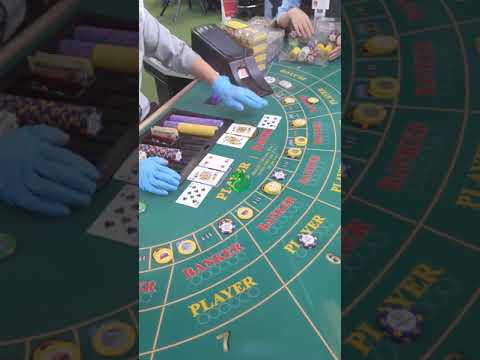
As I transition from slots to table games, the payout table becomes even more critical because it openly shows the house edge. In blackjack, the payout for a natural blackjack is the most obvious example. A standard table pays 3 to 2, meaning a $10 bet returns $15 in profit. If I see a table that pays 6 to 5, the same bet returns only $12, which boosts the house edge significantly and makes the game far less attractive. I always check this rule before sitting down, and at Playzilla Casino, the live dealer and virtual table games display their rules clearly, so I can avoid the inferior payouts. Roulette presents another clear case. The payout for a straight-up bet is 35 to 1 on both European and American wheels, but the presence of an extra double zero on the American wheel means the true odds of winning are worse while the payout remains the same. That single difference elevates the house edge from 2.7% to 5.26%, and the payout table alone cannot reveal the wheel layout, so I combine it with the table information. Craps payout tables are dense, but they list the odds for pass line, come, place, and proposition bets. I use them to identify the bets with the lowest house edge, such as the odds bet behind the pass line, which pays true odds with no house advantage. Baccarat payouts are simpler: banker wins pay 1 to 1 minus a commission, usually 5%, while player wins pay even money, and a tie pays 8 to 1 or 9 to 1. The payout table tells me immediately that the tie bet is a sucker bet because the payout does not compensate for the true probability. By reading these numbers, I can allocate my bankroll to the bets that give me the best statistical chance.
What Makes Payout Tables Are the First Thing I Check Prior to Playing
Whenever I sit down to test a new slot or table game, I do not start by spinning or placing a chip. I begin by locating the paytable button, usually a small “i” icon or a dedicated menu option, and I read it carefully. The cause is simple: the payout table holds the rulebook for that specific game. It tells me the value of every symbol, which combinations award left to right or in any direction, and how the game’s special mechanics, such as cascading reels, expanding wilds, or bonus rounds, are triggered. Without this information, I am essentially guessing. A slot might appear visually impressive, but if the top-paying symbol only returns a modest multiple of my bet and the bonus feature is almost impossible to trigger, the entertainment value may not warrant the cost. I have observed that many players skip this step because they presume all slots work the same way, but that assumption is costly. Some games pay fixed amounts per symbol regardless of the number of paylines, while others vary payouts based on the total bet. Some demand a minimum number of matching symbols to award anything, and others have a lower threshold but with reduced payouts. By opening the payout table first, I can immediately determine whether the game’s structure suits my session goals. If I desire frequent small wins, I search for tables with many low-tier symbol combinations and a high hit frequency. If I am pursuing a bigger payout, I search for the maximum symbol win and the bonus round details. At Playzilla Casino, I like that the game lobby makes it convenient to browse titles and access the information panel instantly, so I never have to put in real money before I grasp what I am actually playing.
Bonus Terms and Payout Tables: A Vital Mix
One of the most overlooked links in online casino gaming is the connection between bonus terms and game payout tables. When I claim a introductory promotion or a deposit bonus, I am not just obtaining free money. I am agreeing to a set of terms that will dictate how I can spend those credits, and the prize schedule becomes an essential tool for satisfying those conditions. Most bonuses come with betting obligations that scale the offer sum, and not all games apply equally toward those conditions. Slots typically contribute 100%, but table games, digital poker, and live casino games often count much less, sometimes as low as 5% or 10%. The payout table helps me determine which games to play with offer money. If a slot has a favorable payout rate and a fair payout chart, it becomes a good option for working through a betting obligation because the anticipated loss is smaller. If I incorrectly choose a high-variance slot with a uneven prize schedule, I endanger exhausting the promotion before completing the betting condition. I also check the maximum bet rule during offer use, which is usually listed in the terms, and I match it against the bet sizes I estimated from the prize schedule. At Playzilla Casino, I always read the offer page carefully before triggering a bonus. I look for the section that specifies game percentages and banned games, and then I check that information with the prize schedules of the approved games. This strategy has helped me sidestep bad shocks and has made the difference between a successful bonus conversion and a frustrating one. I consider the offer rules and the payment chart as two components of the same choice process, and I do not split them.
Practical Tips for Utilizing Payout Tables to Manage Your Bankroll
Money management is not just about setting a budget; it is about picking bets that match the payout table’s structure https://playzillascasino.com/. I commence by establishing my base bet unit based on the minimum bet necessary to trigger all paylines or the table minimum, and then I determine how many such units my session bankroll can handle. The payout table provides me the data I require to predict how quickly my bankroll might dwindle. For example, if a slot requires a minimum bet of $0.20 per spin and the paytable indicates that the average base game win is only 0.3x the bet, I realize that I will have to have a steady stream of bonus triggers to keep going. If the bonus frequency is low, I will change my bet size downward to lengthen my playing time. In table games, I use the payout table to recognize the bets with the lowest house edge and then determine my wagers so that a single session can endure the natural variance. I always set a loss limit and a win goal before I begin, and I utilize the payout information to keep those numbers realistic. If a game’s top payout is 5000x the bet, I understand that going after it requires a long session, and I will not place my win goal at an unrealistic level. I also pay attention to the bet multiplier effect. Some slots increase only the line bet, while others increase the total bet. The payout table explains this, and I apply it to prevent accidentally overbetting on a game where the displayed wins are inflated by the total bet multiplier. I also track my results against the expected hit frequency implied by the paytable. If I am not encountering the bonus feature within the expected number of spins, I may choose to move to a different game rather than pursuing losses. These routines have saved me from many frustrating sessions, and I use them consistently at Playzilla Casino, where the variety of games lets me to change strategies quickly without departing the platform.
- Compute your initial stake as a fraction of your entire session budget, preferably 1% or less, to withstand variance.
- Use the payout table to evaluate the dry spell risk: if big wins are focused in a rare bonus, reduce bet size.
- Set a win goal according to the highest achievable payout per spin or hand, not the assumed jackpot.
- Check if the game rewards on line bet or overall wager and adjust your stake to steer clear of overbetting.
- Switch to a lower-volatility game if the bonus frequency displayed in the paytable is not matching your session results.
Evaluating RTP and Risk Through Payout Information
While the payout table does not always reveal the theoretical return to player percentage directly, I can deduce a great deal about RTP and volatility by studying the distribution of wins. In slots, the RTP is often listed in the game rules or the information panel, and I always verify that number with the payout structure. A slot with a high RTP but a top-heavy paytable that focuses most of the value in a rare bonus round will operate differently from a slot with a slightly lower RTP but a more even spread of medium-sized wins. The payout table helps me differentiate between the two. If I see that the base game symbol payouts are low, and the only significant prizes come from the free spins feature with a multiplier, I know the game is highly volatile, and I will need a larger bankroll to survive the dry spells. Conversely, if the symbol payouts are relatively flat, with many combinations paying between 0.5x and 10x the bet, the game is likely lower volatility and will produce more frequent hits. I use this information to pair the game to my session goals. When I want a leisurely, longer session, I choose games with payout tables that emphasize consistency. When I am willing to take higher risk for a shot at a big win, I look for tables that show a sharp jump in the top-tier payouts. At Playzilla Casino, I can browse games by provider and explore the information tabs to find the RTP, and then I use the payout table to validate how that RTP is distributed. This blend gives me a much clearer picture than either metric alone. I also note that live game shows and specialty titles often include their payout structures in the help section, and I apply the same logic: a higher payout on a specific bonus round might indicate a lower hit frequency, so I modify my expectations accordingly.